There comes a point in every architect's life when you stop looking at houses like everyone else. You walk into someone's home and, instead of noticing the walls or sofa, your brain starts asking awkward questions. "Why does that door hit the wardrobe?" "How do they open that dishwasher?" "Who's making tea in this kitchen?" "Why are there forty-two spotlights?" It's not intentional. We promise. We're not silently critiquing your house while admiring the coffee machine. But after years of designing homes, certain things become impossible to ignore. So, in the spirit of good humour, and hopefully saving a few future renovations, here are some design crimes architects quietly notice.
Crime #1: The Tiny Sofa in the Ballroom
We've all seen it. A beautiful open-plan room stretching the length of the house... with a tiny two-seater sofa floating in the middle. The television is six metres away and the coffee table is in another postcode. People are understandably nervous about furniture feeling "too big", but large rooms generally need generous furniture. A substantial sofa anchors the space, creates intimacy and helps divide open-plan layouts into comfortable zones. Think of furniture as architecture: it's shaping the room just as much as the walls. If your sofa looks lost, chances are the room feels lost too.
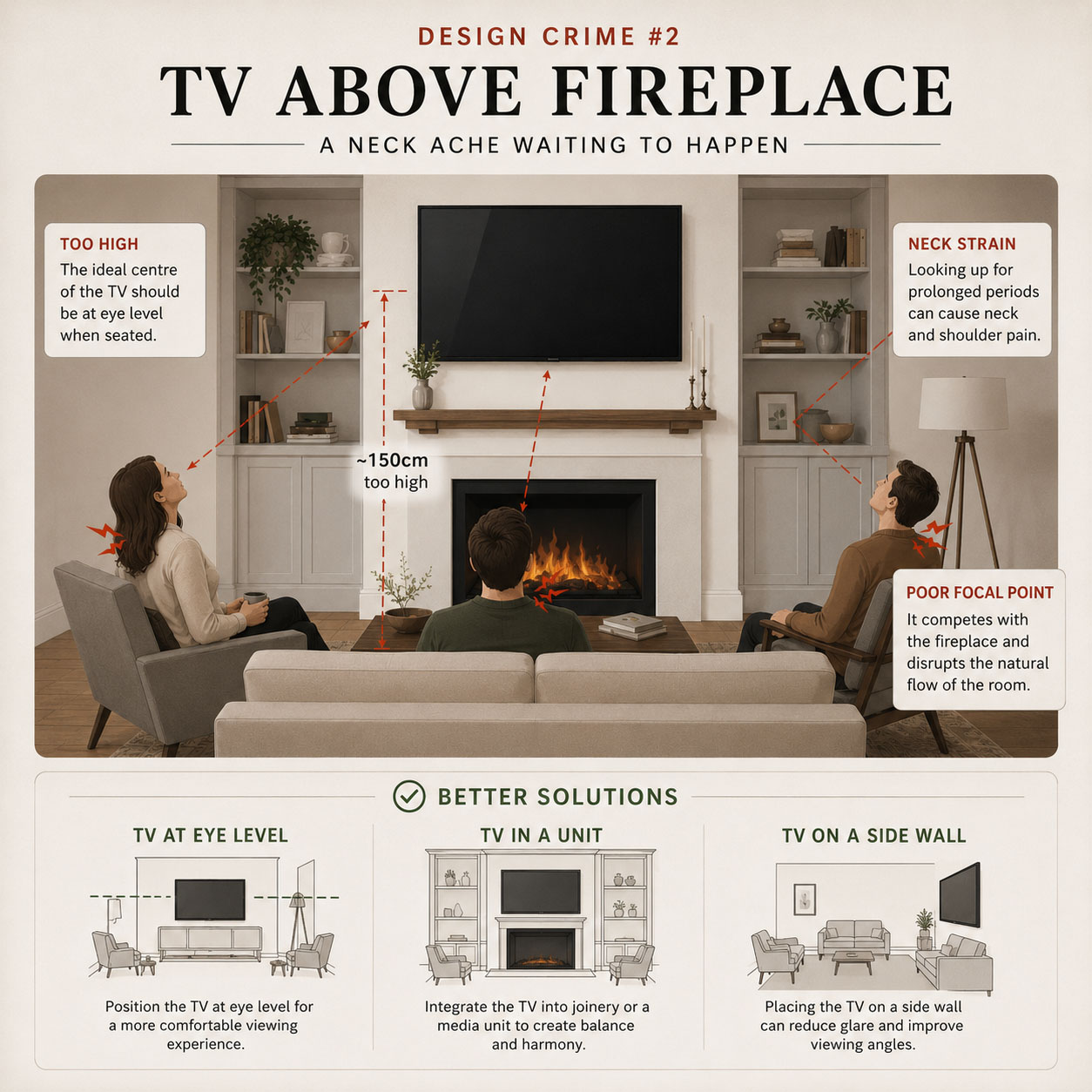
Crime #2: The Television Above the Fireplace
This one divides opinion. Some people love it. Architects... tend not to. Fireplaces were designed to be looked into. Televisions were designed to be looked at. Unfortunately, they both want the same piece of wall. The result can mean evenings spent craning your neck upwards, while heat and electronics aren't exactly ideal companions either. And when the television is off, your focal point becomes a large black rectangle. Sometimes it's the only sensible solution, and we've designed plenty ourselves. But it requires more thought than simply hanging a television above the fireplace. If possible, find a way to hide it when it's not being used, and ask whether the TV really deserves centre stage.
Crime #3: Death by Spotlights
If your newly renovated ceiling resembles Heathrow Airport's runway, you've probably encountered The Builder's Lighting Plan. "How many spotlights would you like?" The answer should almost never be: "More." Good lighting is about atmosphere, not brightness. Your favourite restaurant probably doesn't have twenty-four downlights firing at your forehead. Mariah Carey knows the importance of flattering uplighting! Instead, layer wall lights, lamps, pendants, concealed LEDs and accent lighting. Downlights have their place, but when they're the only source, your home quickly feels like an office. Good lighting should simply make everyone look better.
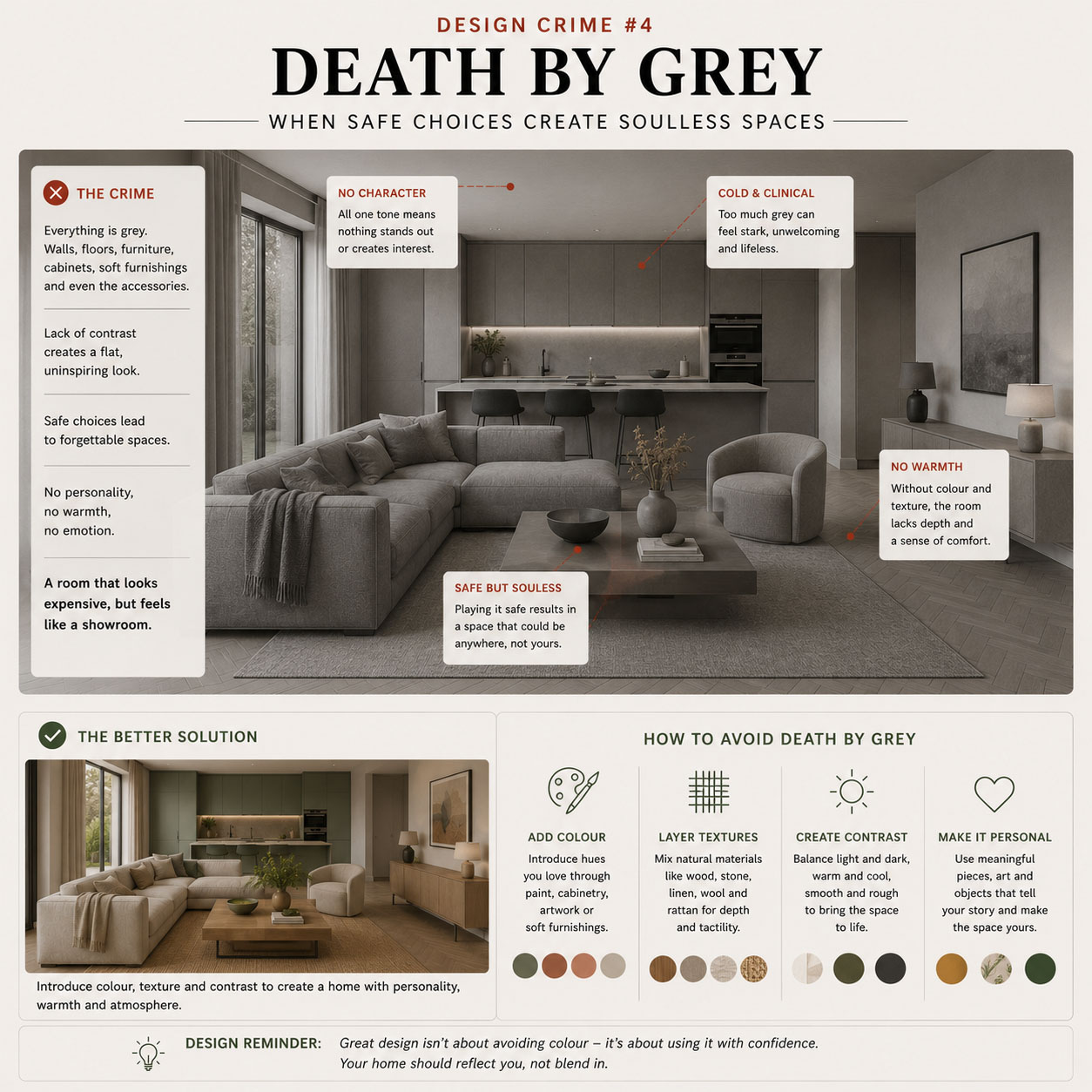
Crime #4: Death by Grey
Grey isn't the villain. Limestone, limewash, zinc and concrete can be beautiful. The problem is when grey becomes the only colour. Grey walls. Grey kitchen. Grey sofa. Grey floors. Eventually, your home starts looking like an organised cloud. Grey feels safe, but it's still a colour, and that trend has come and gone. The most memorable homes show personality: an olive-green pantry, oxblood front door or a downstairs loo that's "a bit mad." Your home should tell your story, not Pinterest's or a developer's show home. So commit to colour. Colour-drench the room. Choose the velvet sofa. Buy artwork that makes you grin. Just don't replace fifty shades of grey with fifty shades of red.
Crime #5: The Door That Starts a Fight
The bedroom door hits the wardrobe. The wardrobe hits the bedside table. The bathroom door opens into your face. Congratulations. Someone forgot to think about door swings. It sounds trivial until you repeat the same awkward dance every day for twenty years. Pocket doors, sliding doors, reversing hinges or moving an opening by 150mm can transform how a room works. It's something we consider on every project because the best planning is often invisible.
Crime #6: Kitchens That Clearly Hate Tea & Coffee
Perhaps the greatest tragedy of British kitchen design. Imagine making a cup of tea. Where are the mugs? Kettle? Sink? Milk? Bin? Now count your steps. If you've walked further than your dog does each morning, something's gone wrong. Good kitchens follow the working triangle: sink, fridge and hob. Ideally, they should sit around 1–2 metres apart. If you can't join the three into a triangle without collisions, you've got an issue. Get it right and cooking feels effortless. Get it wrong and every meal becomes an obstacle course.
Crime #7: The Island That Never Should Have Been
Kitchen islands are the architectural equivalent of a walk-in wardrobe. Everyone wants one. Not everyone has room for one. We've seen beautiful islands where the dishwasher blocks the kitchen, stools stop drawers opening, or two people simply can't pass. An island isn't a trophy. It's working furniture. We'd recommend an absolute minimum of 1 metre circulation around it, with 1.2 metres much better for two people. Sometimes the bravest design decision isn't adding an island. It's choosing not to.
Crime #8: The Hospital Waiting Room Effect
Beautiful flooring. Fresh walls. Expensive furniture. And yet... somehow you're waiting for someone to call your name. Why? Everything has been pushed against the walls, leaving a sea of empty floor in the middle. It feels logical, but often makes rooms feel disconnected rather than bigger. Instead, think of a large room as several smaller spaces: seating around the fireplace, a reading corner, or a sofa and rug defining an open-plan area. Architects call it creating moments. One corner might catch the morning sun and become your coffee spot. Another frames the garden and gets an armchair and floor lamp. The trick is to create destinations, not dead space. And while we're here, can we talk about rugs? Timber, concrete, tiles and stone look fantastic, but large hard surfaces can make rooms feel clinical.
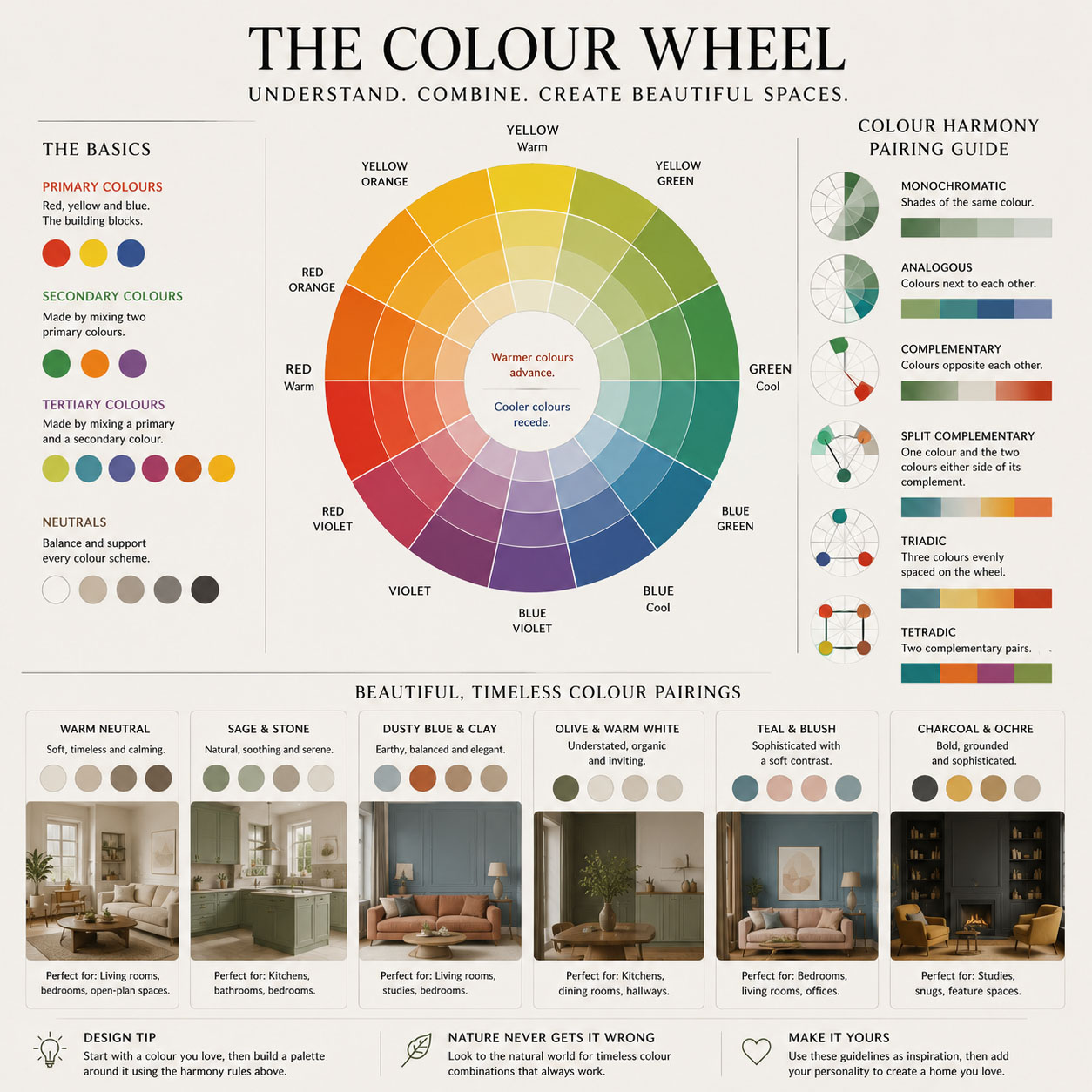
A rug anchors furniture, defines an area, improves acoustics and adds warmth and texture. Without one, furniture can look like it's floating around the room. The best interiors aren't about one dramatic feature. They're dozens of small decisions working together: furniture arranged for conversation, layered lighting, confident colour and inviting textures. Because your home shouldn't feel like a furniture showroom. It should feel like somewhere people don't want to leave.
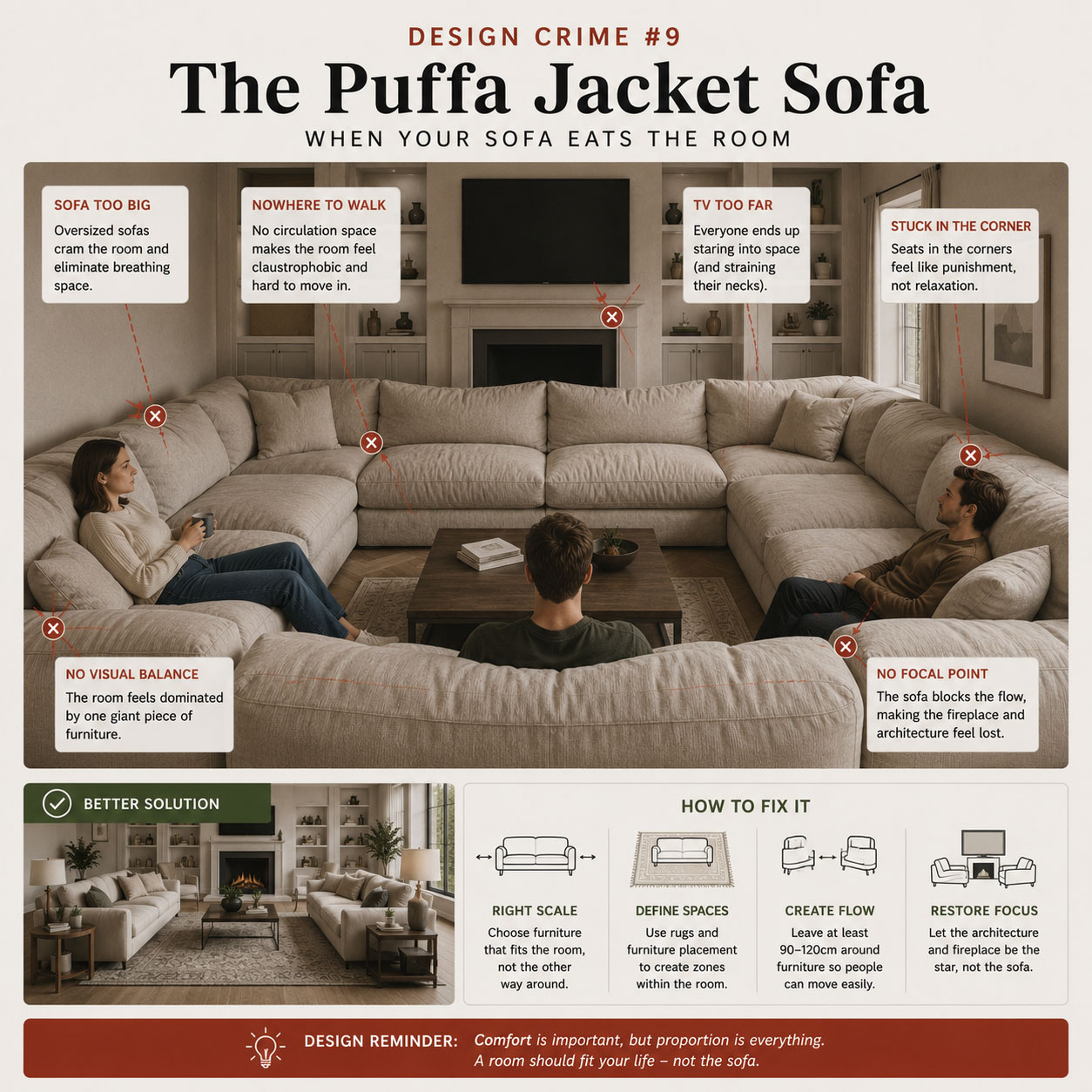
Crime #9: The Puffa Jacket Sofa That Ate the Living Room
The polar opposite of Crime #1. We all know the sofa. It arrives in six enormous pieces, takes four people to carry in and looks wonderfully comfortable in the showroom. Then it moves into your living room... and the living room disappears. The coffee table is marooned like an island. Walking across the room becomes an obstacle course. And heaven help anyone trying to open the patio doors. We're all for comfort. Few things beat disappearing into a sofa with a book, a cup of tea and no intention of moving for hours. But furniture should define a space, not consume it. Bigger doesn't automatically mean more luxurious. Good proportion does. A well-scaled sofa with breathing room feels calm and considered. One occupying every available square metre feels claustrophobic. Sometimes two smaller sofas work better than one enormous L-shape. Sometimes an armchair creates the best seat in the house, particularly beside a window catching the afternoon sun. So buy the sofa that makes you want to curl up all Sunday. Just make sure you can still walk around it. Read our article on designing the perfect Sunday next. And if removing your sofa might require taking out a window... it's probably too big.
Crime #10: The Big Light
"Please tell us you don't only use the big light..." Every home has one. That single ceiling light bright enough to perform surgery. It casts shadows in all the wrong places and somehow turns even the most beautiful room into a village hall. The big light isn't evil. It's useful for cleaning, finding the Lego you've just stood on or locating the TV remote that's disappeared into another dimension. But it shouldn't be your only option. Think in layers: a table lamp beside the sofa, wall lights across textured plaster, concealed LEDs or a floor lamp by your favourite chair. Lighting should create atmosphere, not interrogation. If your guests squint when you turn the lights on... it might be time to retire the big light.
So... Are We Judging?
Not really. Most of these "design crimes" happen for understandable reasons: budget, trends or simply not asking the right questions early enough. That's where architects come in. Our job isn't just to make houses beautiful. It's to spot the tiny frustrations before they're built: the clashing door, awkward kitchen, clinical lighting or island everyone squeezes past. Great design is often about quietly removing hundreds of small irritations until living in your home feels completely natural. And yes... we'll probably still notice your door swings. We just won't mention them over coffee.
Before You Finalise Your Plans...
Before work begins, ask yourself:
- Can two people comfortably cook together?
- Do the doors open without clashing?
- Can you walk comfortably around the island?
- Have you layered your lighting?
- Does the furniture suit the room?
- Will the materials still feel timeless in ten years?
If the answer is "I'm not sure," revisit the design. It's far easier, and cheaper, to solve these problems on paper than after the walls are built.
